Amazon stock moves on four things: how fast AWS grows, how profitable retail and advertising are, how much cash Amazon spends on data centres, and how all that compares with what investors already expected. The last one can help explain sharp moves after results.
On 29 October 2026, Amazon reported third-quarter results with AWS sales up 39.3% year over year and a company-record operating margin of 13.9%. The shares still fell in after-hours trading that evening. That gap between good numbers and a falling price is the thing most readers want explained.
Key takeaways
- Amazon reported AWS sales up 39.3% and a record 13.9% operating margin on 29 October 2026.
- Amazon stock is a share in cloud, retail, advertising and subscriptions at once.
- Heavy capital spending turned free cash flow negative, and Amazon expects more spending in 2027.
What drives Amazon stock
Amazon.com trades on Nasdaq, a US stock exchange, under the ticker AMZN. The business is really several businesses stacked together, and each one pulls the share price in its own way.
| Driver | What investors watch |
|---|---|
| AWS (cloud computing) | Sales growth and segment operating income |
| North America retail | Sales growth and operating margin |
| Advertising | Growth rate and profitability |
| Capital spending | Money going into data centres and chips |
| Expectations | The gap between results, guidance and forecasts |
That last row can matter. The price already reflects a forecast. Investors often compare results with forecasts already reflected in the price.
For context on who else is building this kind of computing capacity, see our ranking of the biggest AI companies in 2026.
The Q3 2026 results, in plain numbers
Amazon's third-quarter release covered the quarter ended 30 September 2026.
| Figure | Q3 2026 |
|---|---|
| Net sales | $201.944 billion |
| Operating income | $28.076 billion |
| Net income | $20.685 billion |
| Operating margin | 13.9%, a company record |
| AWS net sales | $45.984 billion, up 39.3% |
Amazon said AWS was generating revenue at an annual pace of $184 billion. For the fourth quarter, the company forecast net sales of $240 billion to $247 billion and operating income of $28.5 billion to $33.5 billion. Those are forecasts, not results. On 27 October 2026, Reuters reported that the FCC approved Amazon Leo’s $11.5 billion acquisition of Globalstar, clearing a key step for its satellite-internet business.
The share reaction was rough. After the release, AMZN was quoted at $226.00 at 7:59 p.m. EDT on 29 October, down 7.30% from that day's $243.79 close. In the next regular session, on 30 October, it closed at $240.35, down 1.41%.
Why AWS matters so much
AWS rents out computing power. Companies pay to run software and, increasingly, artificial-intelligence models on Amazon's machines instead of buying their own.
Growth is only half the story. The other half is whether that growth is profitable. AWS operating income was $17.773 billion in the quarter ended 30 September 2026, against $11.434 billion a year earlier, an increase of about 55%. AWS is a smaller slice of sales than retail, but a very large slice of profit.
Demand is visible in contracts. On 26 October 2026, Verizon announced an agreement valued at more than $2 billion with AWS to scale distributed computing for AI workloads.
The catch is timing. Servers and buildings are paid for years before the customers using them pay Amazon back.
Retail, advertising and international
North America retail is the volume engine. In Q3 2026, North America net sales were $112.852 billion with operating income of $8.723 billion, against $106.267 billion and $4.789 billion a year earlier. Sales rose modestly, while profit rose a lot. Once warehouses and delivery routes are paid for, extra sales can add to profit faster.
International was smaller and thinner. Net sales were $43.108 billion with operating income of $1.580 billion, up from $40.896 billion and $1.199 billion.
Advertising is another business line. Amazon reported advertising-services revenue of $19.637 billion in Q3 2026, up 11% year over year. Excluding currency changes, it rose 12%.
Subscriptions are the quiet fourth leg. Amazon's US pricing page lists standard Prime at $14.99 per month or $139 per year.
AI spending and free cash flow
Operating cash flow is cash generated by the business. Free cash flow is that cash minus what a company spends on property and equipment.
Right now, the second number is bigger than the first. For the 12 months ended 30 September 2026, Amazon reported $168.300 billion of operating cash flow, $210.657 billion of capital expenditure net of sales and incentives, and free cash flow of negative $42.357 billion. In the quarter alone, operating cash flow was $42.422 billion against $75.878 billion of net capital spending.
Amazon continued to expect approximately $220 billion of cash capital expenditures in 2026, and said cash capital expenditures would increase meaningfully in 2027, mainly because of technology infrastructure. Its 30 October filing also disclosed up to approximately $80 billion of financing for suppliers. It is available from Q1 2027 through Q3 2028, with no funds drawn.
On valuation, Yahoo Finance showed a market capitalization of $2.60 trillion, a trailing price-to-earnings ratio of 19.43, a forward ratio of 22.29 and trailing 12-month earnings per share of $12.37 as of 2 November 2026. The price-to-earnings ratio compares the share price with profit per share. A trailing ratio uses past profit. A forward ratio uses forecasts. Neither tells you what a company will actually earn.
For the same kind of breakdown on another Big Tech share, read our explainer on Alphabet and Google stock.
Risks
- AWS growth could slow. Amazon's own annual filing warns that competition, including in cloud and from AI technologies, could force it to spend more or cut prices, and that large AI investments may not earn back their costs.
- Capital spending stays heavy. Amazon expects cash capital expenditures to rise meaningfully in 2027.
- Retail is seasonal. Amazon's annual filing says demand swings can cause inventory markdowns, write-offs and higher shipping costs.
- Legal and regulatory cases are open. The FTC and states' competition case has trial scheduled for 29 March 2027. A separate FTC and 22-state suit over alleged advertising price inflation is pending. California's pricing case has a trial set for 19 January 2027. The European Commission's preliminary view is that AWS should face special rules for large platforms under the Digital Markets Act. That view is not final.
- Currency moves cut both ways. Amazon's Q3 filing says a 10% adverse exchange-rate move against $16.5 billion of foreign-denominated funds would imply a $1.7 billion decline. If you hold a dollar share from the eurozone, the euro-dollar rate affects your result too.
This article is for information only and is not investment advice.
Frequently asked questions
Why can Amazon stock fall after strong results?
Because the market compares results and guidance against what it already expected. Amazon posted record margins on 29 October 2026 and the shares were quoted 7.30% lower in after-hours trading that evening. The spending outlook and the fourth-quarter forecast range are also relevant.
How fast is AWS growing?
AWS net sales rose 39.3% year over year in the quarter ended 30 September 2026, to $45.984 billion. In Q3, segment operating income was $17.773 billion against $11.434 billion a year earlier.
Is Amazon's free cash flow really negative?
Yes. For the 12 months to 30 September 2026 it was negative $42.357 billion, because capital expenditure of $210.657 billion exceeded operating cash flow of $168.300 billion. That reflects spending on data centres, not an operating loss. Net income for the quarter was $20.685 billion.
Does Amazon still build every data centre it plans?
Not always. On 20 October 2026, Amazon and Loudoun County, Virginia, announced a preliminary agreement to prevent data centres at the former George Washington University campus, with Amazon stating its intent to withdraw its application and forgo legal action. Final agreements were still to be negotiated.
What changes for someone in Europe following a US-listed share?
Three practical things. Nasdaq trades on US hours, so moves often happen in the European evening. The share is priced in dollars, so the euro-dollar rate affects what a gain is worth to you. Tax on dividends and gains depends on where you live.

Sources
- Amazon Investor Relations: Amazon.com Announces Third Quarter Results (29 October 2026)
- Reuters: U.S. agency approves Amazon Leo's $11.5 billion acquisition of Globalstar (27 October 2026)
- Verizon: Third-quarter 2026 earnings press release (26 October 2026)
- European Commission: Commission reaches preliminary position on Amazon's and Microsoft's cloud services (25 June 2026)
- Loudoun County, Virginia: Amazon and Loudoun County announce preliminary agreement on data centres (20 October 2026)
- U.S. Securities and Exchange Commission: Amazon.com quarterly report for quarter ended 30 September 2026 (29 October 2026)
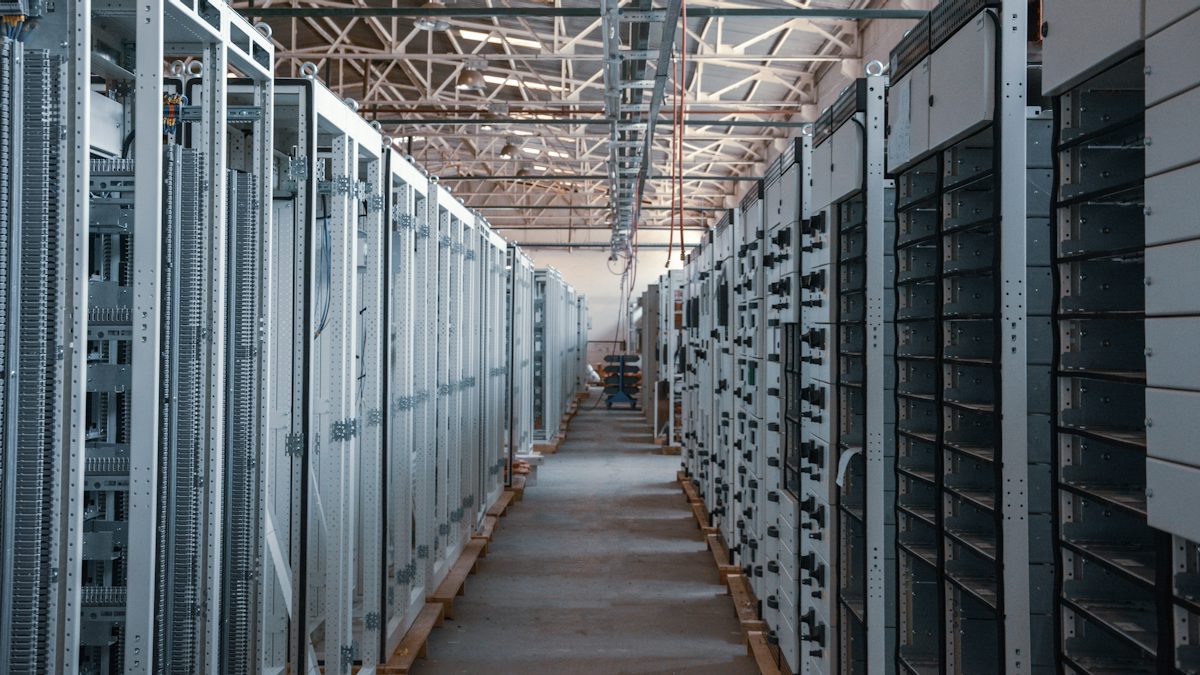
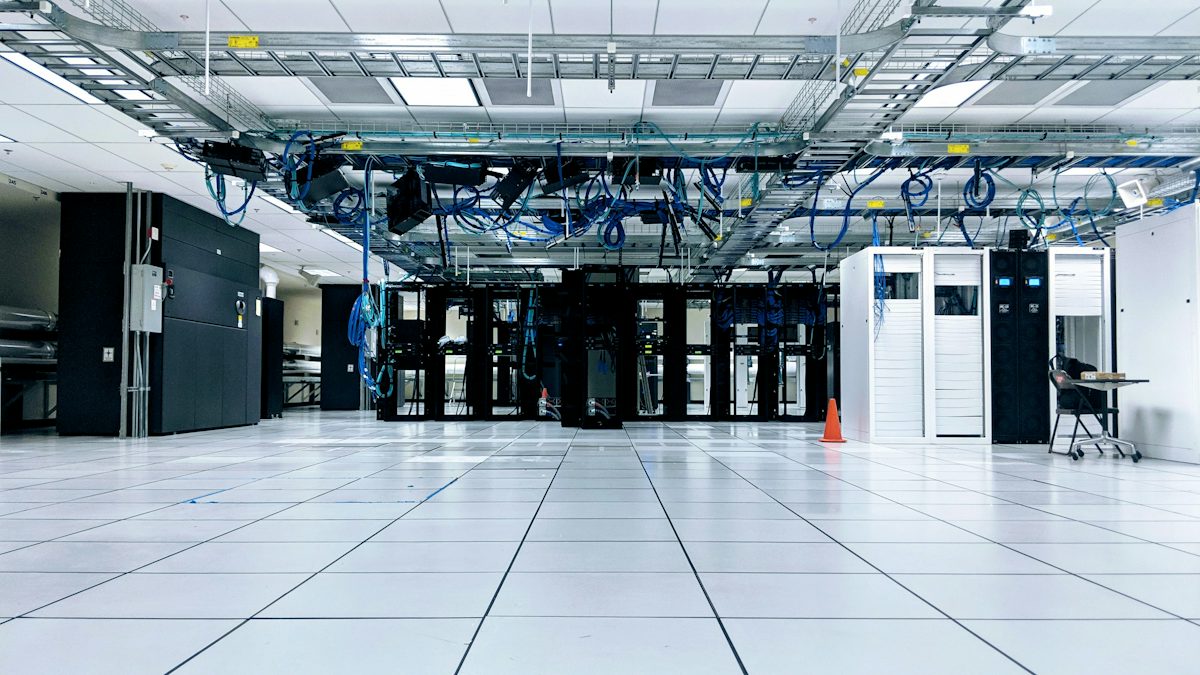
Cover photo by Taylor Vick on Unsplash.

You might also like
Deepen your knowledge with more articles and inspiration.