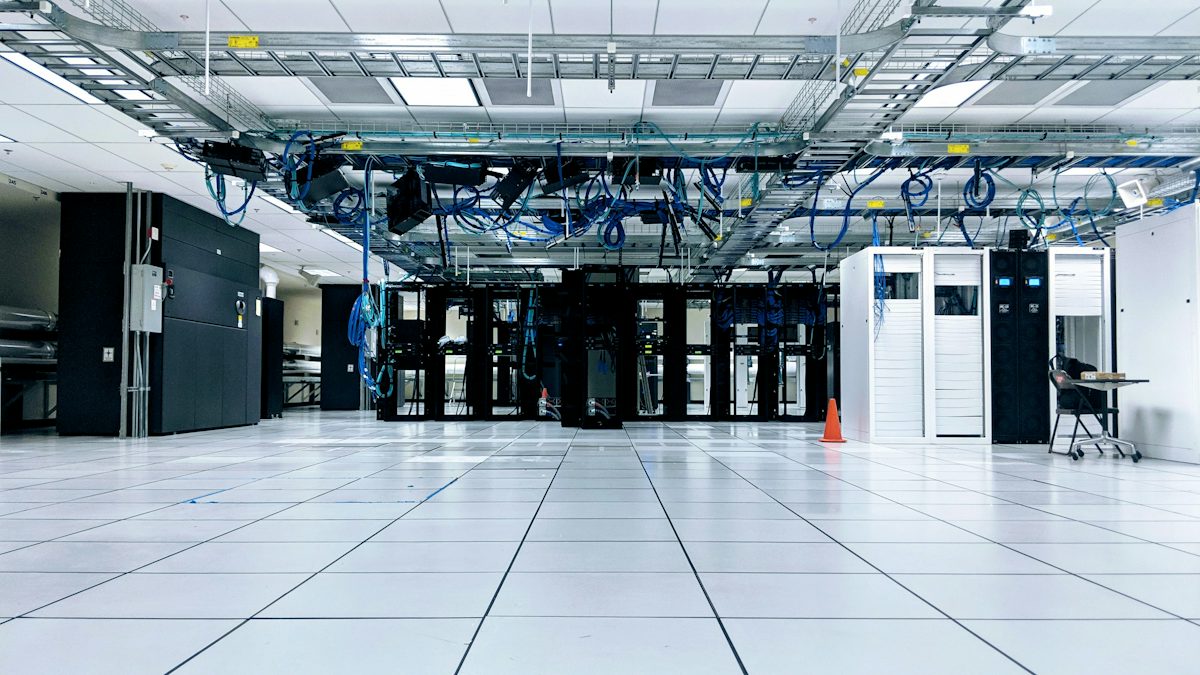
Microsoft stock can move on Azure growth, spending to meet demand, and what investors already expect. The share price can react to both quarterly profit and guidance for the quarters ahead.
On 28 October 2026, Microsoft reported revenue of $92.3 billion for the quarter ended 30 September, up 19%, with Azure growth accelerating to 48% year over year from 42% in the prior quarter. That answered the demand question. It also moved the debate to a harder one: what does meeting that demand cost?
Key takeaways
- Microsoft's revenue hit $92.3 billion in the quarter ended 30 September 2026.
- Azure growth is one factor investors watch when assessing the share price.
- Heavy data-centre spending contributed to free cash flow of $18.6 billion in the quarter.
Where Microsoft stock stood at the end of October
A stock article is not a live ticker. These are dated figures, and they change every trading day.
| Metric | Figure (Oct 2026) |
|---|---|
| Share price (close, 30 Oct 2026) | $521.91 |
| Market capitalisation | $3.88 trillion |
| Trailing price-to-earnings ratio | 27.24 |
| Forward price-to-earnings ratio | 26.34 |
| Forward dividend yield | 0.75% |
| 52-week range | $349.20–$551.15 |
What actually drives the share price
Azure. Azure is Microsoft's cloud business: companies rent computing power, storage and networking from Microsoft instead of buying and running all the hardware themselves. Microsoft said Azure revenue rose 48% on demand across the platform, with growth across all workloads.
Paid AI usage. Curiosity doesn't pay bills, monthly invoices do. Microsoft said Volkswagen Group had equipped more than 330,000 employees with Copilot, its AI assistant for work. That is the kind of contract that turns AI interest into recurring revenue.
Guidance. A strong quarter can still be followed by a falling share price if the market had already priced in more. For the next quarter, Microsoft forecast revenue of $96 billion to $97.1 billion and Azure growth of 49% to 50% in constant currency. Constant currency excludes currency movements. Those are forecasts, not results.
Spending. Capacity costs cash now and shows up as depreciation later, which is the accounting cost of spreading an asset's price over the years it is used.
Everything outside Microsoft. Interest rates, the general mood on big technology shares and the dollar all pull on the price.
Microsoft's position is worth reading next to other AI companies.
The cost of keeping up with demand
Microsoft spends on data centres. Capacity then goes live. Customers use it, and revenue rises. Margins and cash flow then show whether the spending was worthwhile. This takes quarters, not weeks.
The spending is large. Microsoft said it added 24 data centers across five continents in the quarter. It spent $45.2 billion on long-term assets. About three quarters went on short-lived assets, mainly CPUs and GPUs. These chips run cloud and AI workloads. Delayed deliveries of third-party capacity affected the timing. Management also said customer demand still exceeded available supply, and that the timing of capacity additions can swing Azure growth from quarter to quarter.
Profit held up anyway. Operating income was $45.915 billion on $92.279 billion of revenue. This was an operating margin, the share of revenue left after operating costs, of about 49.8%. Net income under standard US accounting rules was $36.629 billion and diluted earnings per share were $4.92.
Cash told a different story. Depreciation expense was $11.1 billion, and Microsoft said AI infrastructure investment and a sales mix shifting towards Azure weighed on its cloud gross margin, while higher capital spending left free cash flow at $18.6 billion. After non-cash items were added back, net income of $36.629 billion became $58.0 billion of operating cash flow. Cash additions to property and equipment were $39.367 billion. This left free cash flow at about $18.6 billion. That is why earnings can rise while cash available to shareholders falls.
The build-out needs funding too. On 29 October, Microsoft announced $25 billion in new borrowing for general corporate purposes, with the offering expected to close on 4 November 2026. For the next quarter, Microsoft said it expected capital expenditure above $50 billion.
The chip side of the same story is covered in our guide to buying Nvidia stock in Europe.
Is Microsoft stock expensive?
A share price on its own tells you nothing. A $500 share is not more expensive than a $50 one. What matters is the price against the profit behind it.
Two numbers do that job. The trailing price-to-earnings ratio compares the share price with the last twelve months of profit per share. The forward one uses forecast profit instead, and forecasts change. At the end of October 2026, Yahoo Finance showed Microsoft's trailing ratio at 27.24 and the forward one at 26.34.
A figure near 27 means investors already assume growth continues. The risk isn't that Microsoft does badly. It's that Microsoft does well, but less well than the price assumes.
For another very large technology company read side by side, see our explainer on Google stock.
What shareholders get back
Microsoft pays a dividend, and it's small. The forward dividend yield was 0.75% at the end of October 2026.
The bigger number is the total returned. Microsoft said it returned $10.2 billion to shareholders through dividends and share repurchases in the quarter. Buybacks reduce the number of shares, so each remaining share owns a slightly larger slice of the company. Dividend policy can change, and past increases are not a promise.
Risks
- AI spending could keep rising faster than the revenue it produces. Capital expenditure was $45.2 billion in the last quarter and is forecast above $50 billion in the next.
- Cloud demand could slow if companies tighten their technology budgets.
- Depreciation, energy and chip costs squeeze margins. Microsoft already said AI infrastructure investment weighed on cloud gross margin.
- Capacity timing is lumpy. Microsoft said delayed third-party capacity deliveries affected timing and can cause quarterly variability.
- Microsoft trades in dollars. For a reader paid in euros, kronor or krone, the currency moves on top of the share price, and broker fees and local tax rules apply.
Investing can lose you money. This article is for information only and is not investment advice.
Frequently asked questions
Why can Microsoft stock fall after a good quarter?
Because the price already contains an expectation. Investors buy ahead of results, so the reaction depends on the gap between what was delivered and what was assumed, and above all on the outlook. Microsoft guided to revenue of $96 billion to $97.1 billion and Azure growth of 49% to 50% in constant currency for the following quarter. If that guidance sits below what the market hoped for, a strong quarter can still be followed by a drop.
Which segment does Azure sit in?
Microsoft changed its reporting names. The segments in the fiscal 2027 first quarter are Agents and Infra, and Devices and Consumer, not the older Intelligent Cloud. Agents and Infra revenue rose 25%, with Azure identified as its main growth driver.
What is Microsoft doing on headcount?
On 26 October 2026, Microsoft announced a time-limited voluntary exit offer for eligible employees in participating teams in Canada, India, the UK and the US at level 70 and below. It was an offer, not a confirmation that anyone had left, and Microsoft gave no headcount.
Does Copilot pricing matter to the share price?
Indirectly, because it sets what each business customer pays. In the US in November 2026, Microsoft listed its Microsoft 365 Copilot Business add-on at a promotional $18 per user per month when paid yearly, down from $21, for an offer running 1 July to 31 December 2026. Consumer Microsoft 365 ran from $9.99 a month for Personal to $19.99 for Premium in the US.
How much did Microsoft actually invest in property and equipment?
Two figures circulate because they measure different things. The reported capital expenditure was $45.2 billion, which includes $7.4 billion of leased equipment. The cash additions to property and equipment in the quarterly filing were $39.367 billion.

Sources
- Microsoft: Microsoft announces first-quarter results (28 October 2026)
- Microsoft: FY 2027 Q1 earnings (28 October 2026)
- Microsoft: Fiscal 2027 Q1 quarterly filing (28 October 2026)
- Microsoft: Microsoft announces debt offerings (29 October 2026)
- Microsoft: Introducing a voluntary exit offer (26 October 2026)
- Yahoo Finance: Microsoft key statistics (30 October 2026)
Cover photo by İsmail Enes Ayhan on Unsplash.

You might also like
Deepen your knowledge with more articles and inspiration.