Tesla FSD Europe: Italy's reported provisional approval, 12th country on Tesla's list
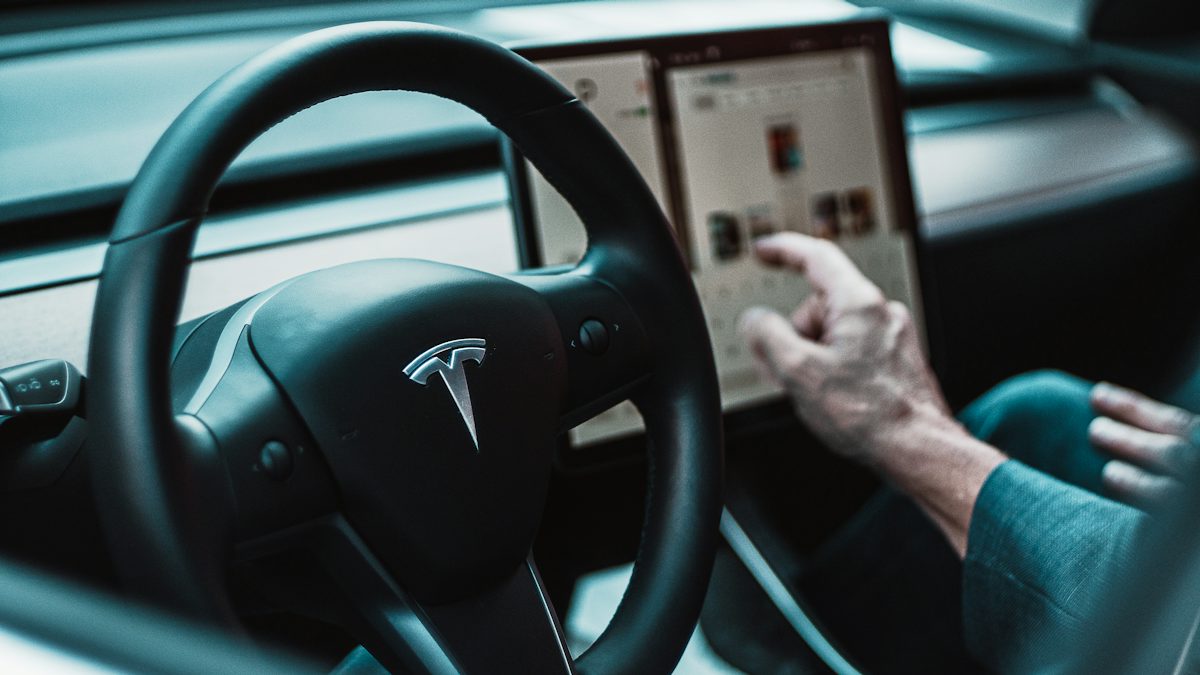
On Friday 20 November 2026, Italy's transport minister Matteo Salvini said Italy had given provisional approval to Tesla Assisted Driving, the European name for Full Self-Driving (Supervised), Reuters reported. Reuters described Italy as the first major EU country to do so, with the wider EU process still ongoing. Tesla's Italian support page now lists 12 countries for the system.
Key takeaways
- Reuters reported that Italy provisionally approved Tesla Assisted Driving on 20 November 2026.
- Italy's reported approval is national, and Tesla decides when to release a wireless software update.
- EU-wide approval is still pending, and the driver stays responsible at all times.
What Italy approved on 20 November 2026
Salvini said Italy's Ministry of Infrastructure and Transport had provisionally approved Tesla Assisted Driving after a technical feasibility assessment.

Under Article 39, "provisional" has a precise meaning. Under Article 39 of the EU's vehicle type-approval rules, an authority can approve a new technology before the European Commission has issued its own act, but that approval is valid only in the country that issued it unless other countries separately accept it. Another member state can extend its effect by telling the issuing authority, in writing, that it accepts it.
So an Article 39 provisional approval does not change the law in Sweden, Germany or anywhere else.
What Tesla Assisted Driving does, and what it doesn't
Tesla's European manual calls the system Tesla Assisted Driving, formerly Full Self-Driving (Supervised). It says the car can steer along a route, negotiate intersections, turn, handle roundabouts and enter or exit highways, while the driver must stay attentive, be ready to take over at all times and remains responsible for safe operation.

The manual also says the cabin camera monitors how attentive the driver is, that warnings escalate after inattention, and that the driver must take over immediately when the system signals it cannot steer.
Estonia's Transport Administration describes Tesla FSD as an SAE Level 2 driver-assistance system, not a transfer of responsibility away from the driver. Level 2 means the car helps with steering and speed while a human keeps watching the road. Tesla says the features require an attentive driver ready to take over, and the Netherlands' RDW says EU-wide approval is still being considered.
Where it is allowed in Europe right now
Three different routes led to the current list: one first approval, ten acceptances of that approval, and one reported separate national decision in Italy.
| Country | How it was allowed | Date |
|---|---|---|
| Netherlands | First type approval, issued by the RDW and valid only in the Netherlands at the time | 10 April 2026 |
| Belgium, Croatia, Czechia, Denmark, Estonia, Latvia, Lithuania, Slovakia, Slovenia, Finland | Accepted the Dutch type approval nationally | Listed by the RDW on 16 November 2026 |
| Italy | Reported separate national provisional approval announced by Salvini | 20 November 2026 |
Those acceptances are national recognition, not EU-wide approval.
For Nordic readers, the picture splits. Denmark and Finland are on the RDW's list of countries that accepted the Dutch approval. As of 26 October 2026, the Swedish Transport Agency allowed only limited Tesla tests with trained test drivers on selected routes, and general customer activation was not permitted while the EU process ran. As of 29 October 2026, Norway's road authority said it was not considering an early introduction while the system did not meet UN Regulation 171, and that Norway would continue with the EU process under its EEA obligations.
How the EU path works, from the Dutch RDW to a Commission decision
Article 39 is the exemption route for technology the existing rules did not anticipate. A manufacturer has to explain why its system does not fit the current rules and provide safety and environmental evidence, including test results showing at least equivalent protection. EU-wide authorisation then requires a legal decision by the European Commission, called an implementing act.
The RDW's request goes to the Commission for that act, and the Technical Committee on Motor Vehicles gives an opinion on it. The committee's rules separate draft acts put to an opinion from items that are only discussed, and require a qualified-majority vote when that procedure is used. A qualified majority means at least 15 of the 27 EU member states, representing at least 65% of the EU population.
A December 2026 committee meeting was the next planned meeting. As of 23 November, no Tesla vote was officially confirmed: Norway's road authority said whether the committee would vote was still undecided, and the Commission's published October agenda listed only continued discussion of the Dutch request.
The Dutch authority has kept working in the meantime. On 3 November 2026 it approved minor changes that put the Tesla Assisted Driving name on the system, and said the existing type approval stayed valid under the same conditions, with the driver still responsible. On 16 November 2026 it approved another update for Tesla vehicles with hardware version 4.0 or higher, said EU-wide approval was still ongoing, and noted the update requires hands on the wheel above 130 km/h.
What it means for Tesla and for drivers
Approval, activation and your own car are three separate steps. The RDW's 16 November notice applies to vehicles with hardware version 4.0 or higher, and says the manufacturer is responsible for when the wireless software update is released. On 23 May 2026, Tesla ended the €7,500 one-time option in Europe and moved buyers to a €99-a-month subscription.
Frequently asked questions
What happens if the European Commission says no?
A provisional approval has no automatic legal effect in other member states. Each one may accept it on its own territory by written notice. If the Commission refuses EU authorisation, the issuing authority must revoke the approval six months after that decision, subject to the regulation's transition rule for vehicles already manufactured in accepting states.
Is the European version the same as the American one?
Not exactly. Tesla uses the name Tesla Assisted Driving in Europe and FSD (Supervised) in the US.
Can Tesla owners in Sweden or Norway use it today?
Sweden's transport agency said in October 2026 that only limited tests with trained test drivers on selected routes were allowed, with no general customer activation while the EU process continued. Norway's road authority said in October 2026 that it was not considering an early introduction while the system did not meet UN Regulation 171.
Does any of this mean driverless cars in Europe?
No. What Salvini announced on 20 November 2026 was approval of a supervised driver-assistance system, not driverless operation and not final EU-wide authorisation. Tesla's own manual puts responsibility for safe operation on the driver at all times.

Sources
- Reuters: Italy gives green light to Tesla self-driving system ahead of EU approval (20 November 2026)
- Estonian Transport Administration: Transport Administration approved Tesla driver-assistance system under Dutch type approval (29 May 2026)
- Swedish Transport Agency: New driver-assistance systems and ongoing EU process for Tesla (26 October 2026)
- RDW: Tesla driver assistance system receives update (16 November 2026)
- Tesla: Tesla Assisted Driving
- EUR-Lex: Regulation (EU) 2018/858
- Norwegian Public Roads Administration: Driver-assistance systems
- European Commission: Technical Committee on Motor Vehicles rules of procedure
Cover photo by David von Diemar on Unsplash.

You might also like
Deepen your knowledge with more articles and inspiration.