OpenAI's dots are ChatGPT agents that keep working on a goal between your messages. On 3 November 2026, OpenAI added GPT-6.1 Terra alongside GPT-6 Astra. A dot can now use different models for different parts of a job. For you, that changes what a dot can handle, not who can get one.
Key takeaways
- OpenAI added GPT-6.1 Terra to dots on 3 November 2026, alongside GPT-6 Astra.
- A dot runs on its own online computer and can reach over 4,000 apps.
- ChatGPT Pro dots were unavailable in the European Economic Area and Switzerland on 4 November 2026.
What OpenAI's dots are, in plain words
An AI agent is software that reads a goal, picks the steps and uses apps you have approved. OpenAI announced dots on 29 September 2026 as always-on ChatGPT agents that take on ongoing work and keep making progress between conversations.

Each dot has its own cloud computer and browser. A cloud computer is an online computer OpenAI runs for the dot. OpenAI can connect a dot to over 4,000 apps. At launch, you could message or call a dot in ChatGPT on desktop, web and mobile. You could also message it in Slack and Teams.
Texting came later. On 28 October 2026, OpenAI started a limited US trial that let some Pro users text their dot through iMessage or RCS. OpenAI said a dot can text only its owner.
What changed on 3 November
The 3 November update added GPT-6.1 Terra as another model dots can use, so a dot can draw on different models for different parts of its work. Terra uses the safeguards developed for GPT-6 Astra.

Some things are still open. As of 4 November 2026, OpenAI had not explained how a dot picks between the two models, had not disclosed a user override, and had not said when the change rolls out. The same update described specialist dots and wider user access as future plans, not completed launches.
For context on the firms building this kind of software, see our guide to the biggest AI companies in 2026.
What "always-on" means day to day
A dot keeps its own cloud computer, so it can keep making progress when you are not actively engaged. Its work does not depend on your browser or laptop staying open.

When a dot does background research, OpenAI says it uses read-only tools and is restricted in code from sending messages, changing content in connected apps, or controlling a browser or desktop. In plain terms, it can read and take notes. It cannot act on what it finds.
Acting is governed by Custom Rules. As of 4 November 2026, those rules can let a dot act without asking, act only when you explicitly request it, ask for approval first, or hand the action back to you. They can also prevent specific actions. What they cannot do is grant app or computer access, or override built-in safeguards.
Some actions always stop for you. OpenAI says permanently deleting data, installing or running software from an unrecognised source, and granting new security-sensitive access require confirmation each time. Changing a password must be handed back to the user to complete.
Dots, ChatGPT and automations: what is actually new
| What it does | When it runs | |
|---|---|---|
| ChatGPT chat | A conversational exchange | While you are in it |
| Scheduled automation | Runs on its trigger and instructions | At the trigger |
| Agent mode | A multi-step task you ask for, pausing when it needs input or confirmation | In your session |
| Dot | Holds ongoing responsibility across conversations, uses connected apps and its own cloud computer | In the background or on scheduled tasks |
The shift is from a tool you open to something that keeps a standing to-do list. If you are weighing ChatGPT against the alternatives for everyday work, our Claude vs ChatGPT comparison covers the paid plans.
Who can get a dot in Europe, and what it costs
As of 4 November 2026, ChatGPT Pro dots were unavailable in the European Economic Area, Switzerland and the UK. Business Premium dots were available in supported ChatGPT regions, subject to workspace eligibility. Enterprise, including Edu and Healthcare, had trial access only when a workspace admin enabled it. It was off by default. Requirements about where data is stored can also affect eligibility. On 28 October 2026, The Decoder reported that OpenAI expected wider European availability in a few weeks.
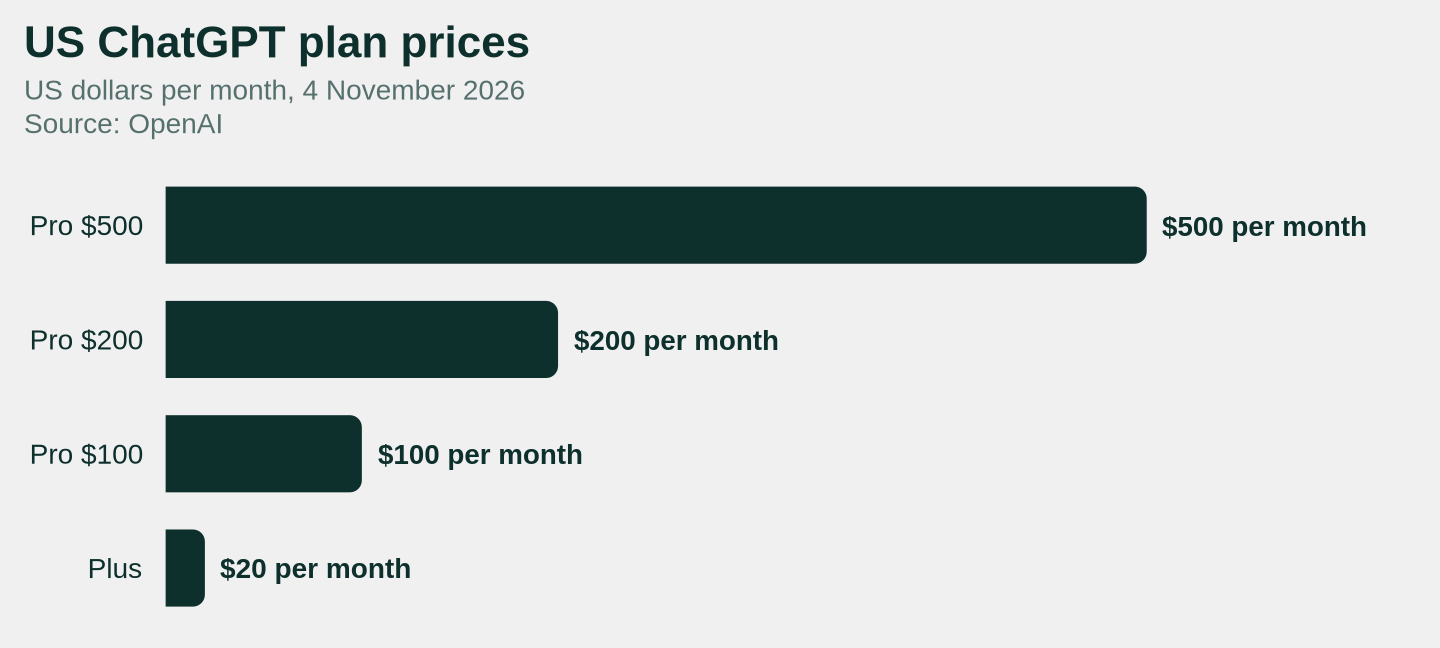
On 4 November 2026, OpenAI's US page listed ChatGPT Plus at $20 per month. It listed Pro tiers at $100, $200 or $500 per month. The first dot was included with Pro or Business Premium at no extra charge. A US Business Premium seat was listed at $100 per month billed annually, or $125 per month billed monthly, with the first dot included.
One more detail on allowances: on 29 October 2026, OpenAI doubled the included Work and Codex usage allowances for its Pro 100 and Pro 500 plans.
First jobs worth handing over
Start with tasks where mistakes are cheap and reversible. Examples include research summaries and meeting preparation. You can also draft replies for review, tidy files or turn a messy inbox into a shortlist. This fits OpenAI's read-only background research and drafts that you approve.

Keep payments, contracts, published content, customer messages and account changes under your approval. Custom Rules can make a dot ask for approval first. They can also hand the action back to you.
For a solo consultant, a useful first job is meeting research. For a small team, it is sorting an inbox. For a freelancer with several clients, it is keeping a running note per client that someone reads before anything goes out.
What can go wrong
The risk with an agent is a wrong action, not only a wrong answer. OpenAI says Auto-review checks certain planned actions against your instructions, Custom Rules and safety requirements. It says its safety monitoring can pause or stop a dot's work and warn you. It also warns that dots can make mistakes.
A dot can connect to over 4,000 apps. Give it only the access needed for the job. Custom Rules cannot override built-in safeguards or grant access by themselves.
Frequently asked questions
Can a dot keep working while my laptop is off?
Yes. Each dot has its own cloud computer, so its progress does not depend on your browser or laptop staying open. Your own computer and its contents stay separate unless you choose to connect them.
Can a dot send an email without asking me?
Not during background research. OpenAI says that work uses read-only tools and is blocked in code from sending messages or changing content in connected apps. For other actions, your Custom Rules decide whether the dot acts freely, asks for approval first, or hands the task back to you.
Which model does a dot use?
Both GPT-6 Astra and GPT-6.1 Terra, since the 3 November 2026 update. OpenAI says a dot can draw on different models for different parts of its work, but as of 4 November 2026 it had not explained the selection criteria or disclosed a user override.
Is a dot included in my plan or an extra charge?
The first dot is included with ChatGPT Pro or Business Premium at no extra charge, per OpenAI's US pricing on 4 November 2026. OpenAI described additional dots and wider user access as future expansion at launch.

Sources
- OpenAI: Introducing dots (29 September 2026; updated 3 November 2026)
- OpenAI: How we build safety, security, and privacy into dots (date not stated)
- OpenAI Help Center: Getting started with your dot (date not stated)
- The Decoder: OpenAI teases dots for Europe, but its Berlin DevDay was really about building a platform (28 October 2026)
- OpenAI: ChatGPT pricing (4 November 2026)
- OpenAI: ChatGPT Business pricing (4 November 2026)
- OpenAI Help Center: Dots messaging and plan allowances (28-29 October 2026)
- OpenAI: Dots controls (4 November 2026)
Cover photo by Domaintechnik on Unsplash.

You might also like
Deepen your knowledge with more articles and inspiration.