ChatGPT is better for most everyday work because it adds image generation, voice conversations and spreadsheet analysis; DeepSeek suits free chat and low-cost API jobs. DeepSeek's chat app is free, while API prices for both services vary by model. Here is what each one gives you, and what it costs.
Key takeaways
- DeepSeek's chat app is free, while ChatGPT's US plans run from $0 to $100 a month.
- ChatGPT adds image generation, voice and spreadsheet analysis.
- DeepSeek publishes its model weights, so a technical team can run the models on its own servers.
- Watch the API bill: DeepSeek charges different rates at peak and off-peak hours.
DeepSeek vs ChatGPT at a glance
| What you compare | DeepSeek | ChatGPT |
|---|---|---|
| Who builds it | Hangzhou DeepSeek Artificial Intelligence, based in Hangzhou, China | OpenAI, in the US |
| Chat price (Nov 2026) | Free app, no paid chat plan | Free $0, Go $6, Plus $20, Pro from $100 a month in the US |
| Current models | deepseek-flash and deepseek-v4-pro | GPT-6 Luna on Free and Go, GPT-6 Sol on Plus and Pro |
| Output price per million tokens (Nov 2026) | $0.60 off-peak to $1.20 peak for flash | $0.50 for GPT-6 Luna, $50 for GPT-6 Astra |
| Images and voice | Web search and file upload with text extraction | Image generation, image understanding and voice chats |
| Files | File upload with text extraction in the app | Document and spreadsheet uploads and analysis |
| Run it yourself | Weights and inference code published | ChatGPT models are hosted only |
The table settles price and features. It does not settle which one writes a better proposal for your clients.
Who makes each one
ChatGPT is OpenAI's assistant for writing, studying, planning, coding and analysing images and files, and OpenAI introduced it on 30 November 2022. You use it as a service. The model behind your chat depends on your plan: OpenAI's November 2026 notes say Free and Go users get GPT-6 Luna, while Plus, Pro, Business and Enterprise users get GPT-6 Sol.
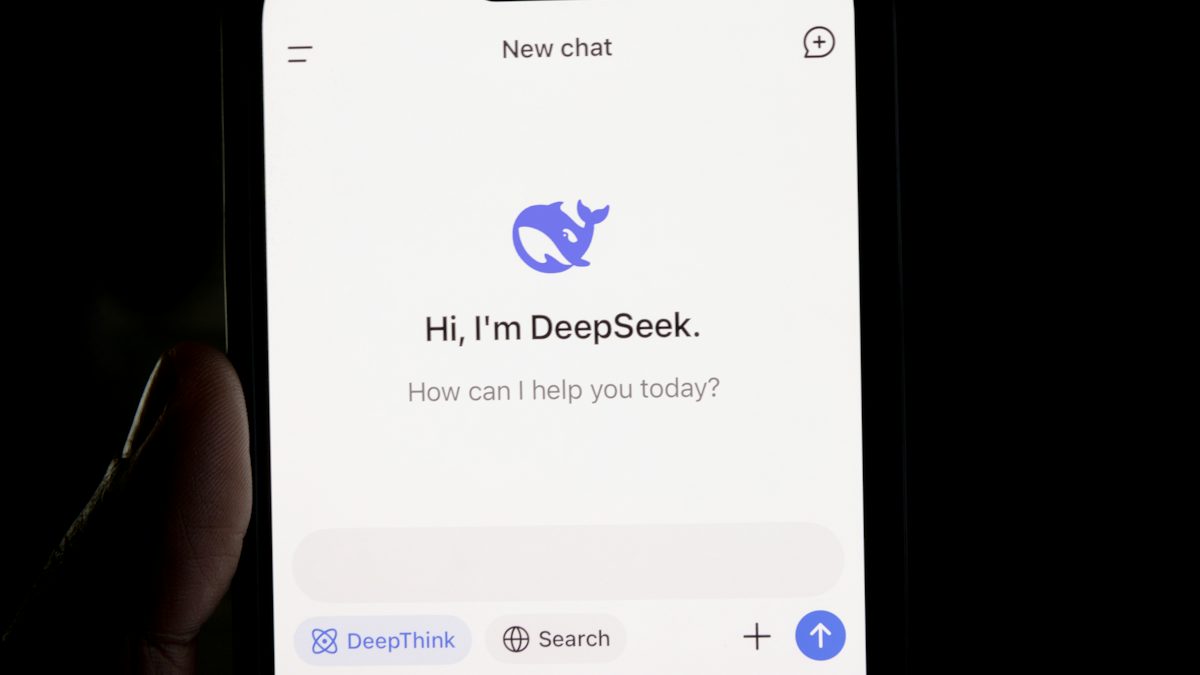
DeepSeek was created in 2023 by the quant fund High-Flyer, and its founder Liang Wenfeng leads it, Reuters reported. Its app launched on 15 January 2025, powered by DeepSeek-V3. Two models serve its API today: deepseek-flash, which runs V4.1-Flash-1017 from 17 October 2026, and deepseek-v4-pro.
For another head to head on the same question, see our comparison of Claude and ChatGPT.
Price: what each one costs
If you are one person in the chat window
DeepSeek describes its app as free, with no ads and no in-app purchases, and it lists no paid monthly chat subscription.
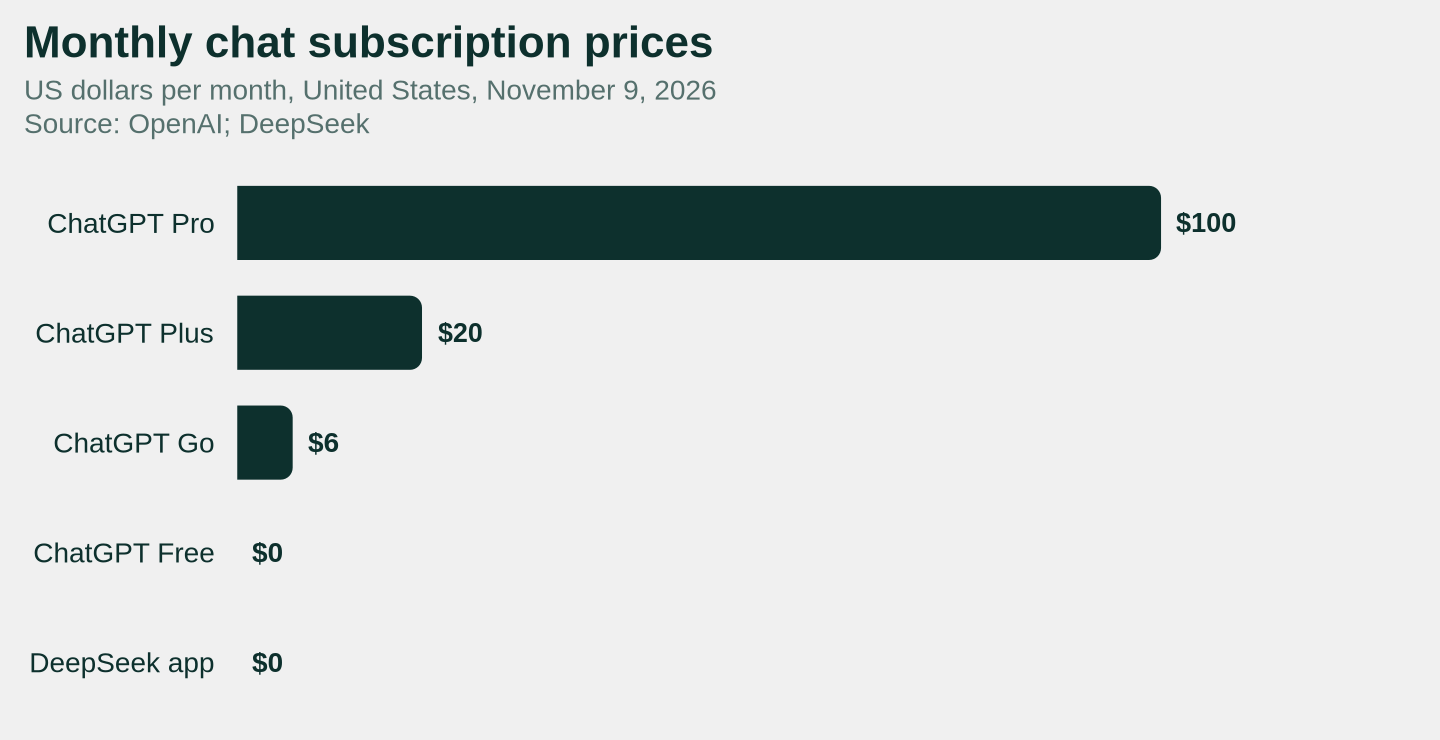
In November 2026, ChatGPT's US individual plans are Free at $0, Go at $6, Plus at $20 and Pro from $100 a month, with $100, $200 and $500 tiers inside Pro. Free includes unlimited everyday text chats, subject to safeguards against abuse, but limited tool use. Go adds more messages with tools, uploads, images and voice. Plus adds advanced reasoning, expanded tools, research and memory. On the same pricing page, Free's instant context window is listed at 27K and Go and Plus at 54K, meaning roughly how much text the model holds in one go.
If you are building something
An API is the paid connection that lets your own software talk to the model. You pay by tokens, the chunks of text going in and coming out.
In November 2026, DeepSeek's listed API prices per million tokens are $0.15 cache-miss input, $0.003 cache-hit input and $0.60 output off-peak for deepseek-flash, rising to $0.30, $0.006 and $1.20 at peak. Its deepseek-v4-pro model is $0.66 cache-miss input, $0.022 cache-hit input and $1.98 output off-peak, rising to $1.32, $0.044 and $3.96 at peak.
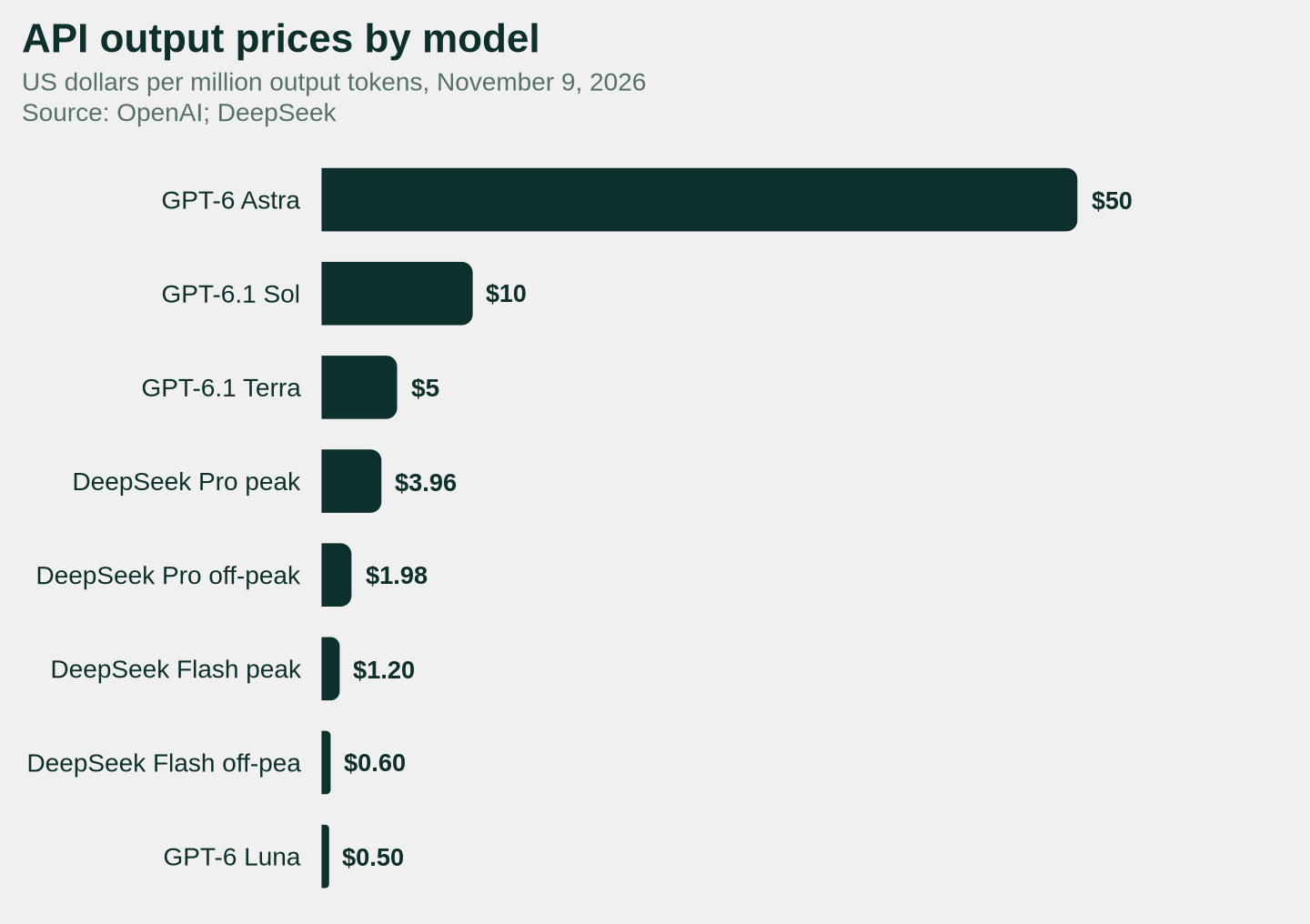
In November 2026, OpenAI's standard API prices per million tokens are $0.10 non-cached input and $0.50 output for GPT-6 Luna, $1 and $5 for GPT-6.1 Terra, $2 and $10 for GPT-6.1 Sol, and $10 and $50 for GPT-6 Astra, for context lengths under 272K. On 1 November 2026, DeepSeek began charging $0.75 per 1,000 successful Search and Fetch API requests.
Token price is one line of the bill. Integration, checking outputs and staff time are the rest, and no price list covers those.
What each one can actually do
For writing and client documents, both are useful. OpenAI says ChatGPT Work can research and analyse, use connected apps and files, and create documents, spreadsheets, presentations, reports and Sites. DeepSeek's Harness product describes file and data work, document and slide drafting, coding and research.
For code, maths and structured analysis, DeepSeek is built for cost-sensitive API use and agent workflows, with low per-token rates and support for tool calls. That matters when you run thousands of jobs a month rather than twenty.
For everything around the text, the gap is clear. ChatGPT supports image generation and understanding, voice conversations, document and spreadsheet uploads and analysis, and web search, with limits depending on plan and account. On 4 November 2026, OpenAI introduced ChatGPT Images 2.6, with GIF creation rolling out in ChatGPT and saved reference images for reuse in later chats. DeepSeek's app lists web search and file upload with text extraction. Its flash API understands images.
If you want a broader view of the free tiers on offer, read our guide to AI chatbots and their prices.
Weights, hosting and your data
DeepSeek says it publishes its model weights and inference code, so its models can run on infrastructure you control. The repository and weights of DeepSeek-V4.1-Flash-1017 are licensed under MIT, which allows use, copying, modification, distribution, sublicensing and sale, as long as you keep the copyright and permission notice. Open weights mean you can run and adapt the model. They do not make it free to operate, and they are separate from the hosted-service terms.

ChatGPT's GPT models are reached as hosted services, not downloadable weights. OpenAI's separate gpt-oss-120b and gpt-oss-20b models can run on infrastructure you control, but they are not available inside ChatGPT.
On the hosted side, DeepSeek's terms grant a revocable, non-transferable, non-exclusive right to use the service. Users keep rights in their inputs, and DeepSeek assigns them any rights it holds in the outputs, subject to the terms, including rules for publishing AI-generated content.
The verdict
For most readers, ChatGPT is the better pick because it combines writing, documents, spreadsheets, presentations and research in one service.
Pick ChatGPT if your week is client documents, spreadsheets, presentations and research in one place, and you are fine paying $20 a month for Plus in the US.
Pick DeepSeek if your work is code and structured analysis at volume, and off-peak API rates decide the budget.
Pick ChatGPT if you need image generation or voice conversations alongside client work.
Frequently asked questions
Is DeepSeek free? The app is, by DeepSeek's own description: free, with no ads and no in-app purchases, and no paid monthly chat subscription listed. The API is not free. In November 2026, you pay per million tokens, from $0.15 input and $0.60 output off-peak for deepseek-flash. Running the weights yourself costs servers and people instead.
How much is ChatGPT for a small team? In the US, in November 2026, ChatGPT Business costs $25 per standard seat a month, or $20 when billed annually. A premium seat is $125 monthly, or $100 billed annually. Enterprise pricing is not listed as a fixed monthly price.
Can you run DeepSeek on your own servers? Yes, within the licence. DeepSeek publishes model weights and inference code, and the V4.1-Flash-1017 weights are under the MIT licence, which permits modification, distribution and sale if you keep the notices. The hosted app and API are the alternatives.
Does ChatGPT have an open-weight option? Not ChatGPT itself. Its GPT models are hosted services. OpenAI's separate gpt-oss-120b and gpt-oss-20b are open-weight models that run on infrastructure you control, and they are not available in ChatGPT.
Who owns what you type and what comes out? On DeepSeek's hosted service, users retain rights in their inputs, and DeepSeek assigns them any rights it has in the outputs, subject to its terms, including its rules for publishing AI-generated content.

Sources
- OpenAI: Introducing ChatGPT (30 November 2022)
- Reuters: The High-Flyer AI quant fund behind China’s DeepSeek (2025)
- OpenAI: ChatGPT pricing (9 November 2026)
- DeepSeek API Docs: Pricing (9 November 2026)
- OpenAI: API pricing (9 November 2026)
- Hugging Face / DeepSeek: DeepSeek-V4.1-Flash-1017 (9 November 2026)
- DeepSeek: DeepSeek app (15 January 2025)
- OpenAI Help Center: ChatGPT capabilities overview (9 November 2026)
Cover photo by Solen Feyissa on Unsplash.

You might also like
Deepen your knowledge with more articles and inspiration.